

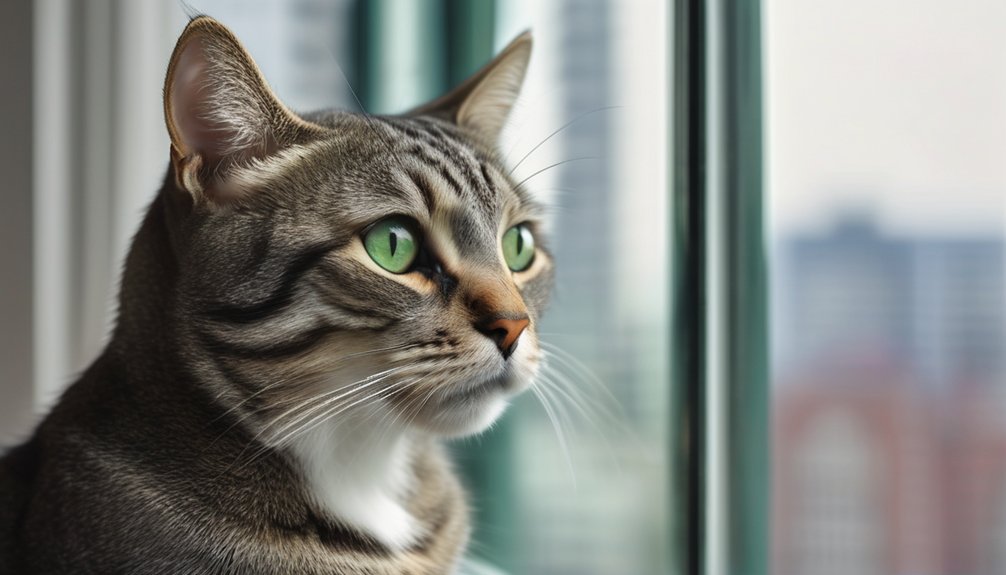
A cat existential crisis involves moments when your cat shows signs of deep uncertainty or reflection, such as staring into space, pausing suddenly, or acting restless. These behaviors suggest your cat might be experiencing complex emotional states beyond simple instincts. To help, keep their environment calm and stable, provide consistent routines, and offer quiet spaces for contemplation. Understanding these signs helps you respond better to your cat’s needs. Explore further to gain more insight into their emotional world.
Understanding the Concept of a Cat Existential Crisis
A cat existential crisis refers to moments when a cat appears to display behaviors that suggest confusion, uncertainty, or a lack of purpose.
You might notice subtle crisis signs that hint at a deeper feline philosophy, where your cat questions its role or desires beyond mere survival.
Understanding this concept involves recognizing that cats, like you, can experience moments of introspection or uncertainty, reflecting a search for meaning.
Common Signs and Behaviors in Cats Reflecting Existential Thoughts
Certain behaviors in cats can indicate moments of existential reflection, even if we can’t fully interpret their inner experiences.
You might notice cambios en el comportamiento felino, such as prolonged staring into space, sudden pauses, or a reluctance to engage in usual activities.
These señales emocionales suggest your cat is processing something deeper than routine stimuli. Increased vocalizations or unusual restlessness may also appear, hinting at internal questioning or uncertainty.
Recognizing these patterns helps you appreciate your cat’s complex emotional world, granting them the freedom to explore their thoughts without interference or judgment.
How to Support Your Cat Through Moments of Existential Reflection
When your cat shows signs of existential reflection, you can support them by creating a calm and stable environment that encourages relaxation and safety.
Provide consistent routines to enhance cat comfort, reducing stress from unpredictability.
Offer quiet spaces where your feline can retreat and process their thoughts undisturbed.
Engage in gentle interaction to communicate feline support without overwhelming them, observing their response carefully.
Maintain a balanced environment, avoiding sudden changes or loud noises that might disrupt their sense of security.
Frequently Asked Questions
Can Other Pets Experience Existential Crises Like Cats?
Yes, your perro ansiedad shows they can struggle like cats do. Even a conejo comportamiento changes when stressed. You’ll notice pets seek freedom from worries, so understanding their feelings helps you give them the space they need.
Do Certain Cat Breeds Have More Existential Thoughts?
You’ll find that some razas reflexivas, like Siamese cats, show more comportamiento introspectivo. They seem to ponder deeply, embodying a free spirit that questions their world and embraces their unique, introspective nature without restraint.
Is a Cat’s Existential Crisis Linked to Aging?
Yes, you’ll notice a cat’s envejecimiento emocional often triggers cambios comportamiento, reflecting an existential crisis. As they age, they seek freedom in familiar routines, so you should respect their space and adapt to their evolving needs.
Can Diet Influence a Cat’s Existential Behavior?
Yes, you can influence your cat’s existential behavior through diet. Nutritional impact plays a key role in behavioral changes, helping your feline friend feel more balanced and free from internal struggles that affect their mood and outlook.
Are There Any Cultural Beliefs About Cat Existential Crises?
You’ll find creencias culturales linking cats’ crisis mental to spiritual freedom or bad omens. Embrace these views, but remember, your cat’s freedom to explore their mind should always come first, beyond cultural labels.