

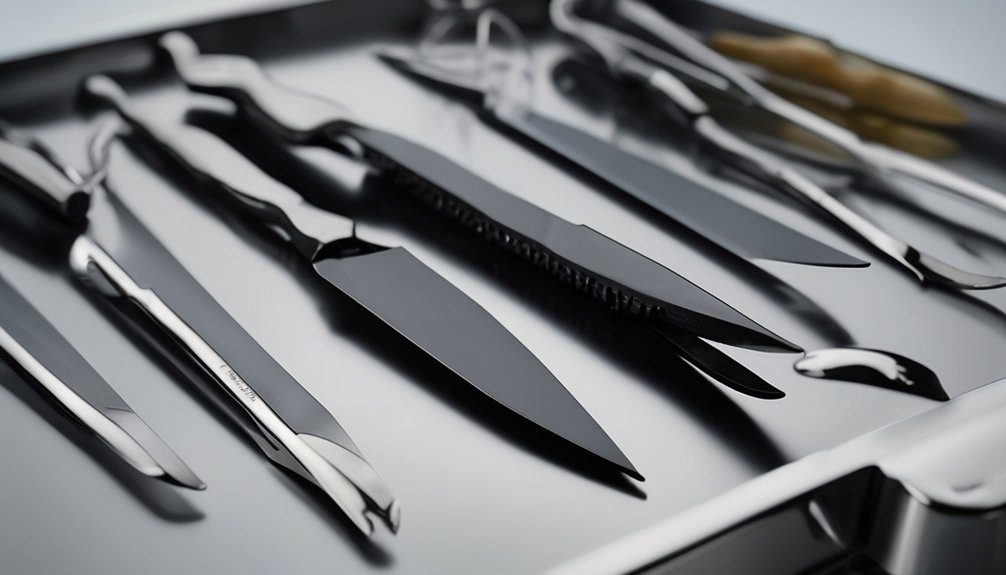
You rarely see surgeons using obsidian scalpels despite their unmatched sharpness because these blades are fragile and hard to sterilize properly. Their delicate nature means they can chip or degrade with standard sterilization methods, leading to safety concerns and strict regulatory limits. Steel and advanced scalpels offer more reliable performance, easier sterilization, and better durability. If you want to understand the full scope of these challenges and the evolving tools in surgery, more detailed insights are available.
Historical Use and Unique Properties of Obsidian Scalpels
Although obsidian scalpels might seem like a modern innovation, their use dates back thousands of years to ancient civilizations.
You’ll find that these tools hold remarkable historical significance, as they were valued for their exceptional sharpness and cutting ability.
When you use an obsidian scalpel, you experience surgical precision unmatched by many metal blades, thanks to the stone’s ability to fracture at a molecular level, creating an extremely fine edge.
This unique property allowed early surgeons to perform delicate procedures with minimal tissue damage.
Understanding this history helps you appreciate why obsidian scalpels remain a fascinating subject in surgical tool development.
Challenges in Sterilization and Reusability
When you handle obsidian scalpels, you quickly notice that their sterilization poses unique challenges compared to metal instruments.
The fragile nature of obsidian makes it sensitive to high temperatures and harsh chemicals commonly used in sterilization processes. These sterilization challenges limit how you can clean and reuse the scalpel safely.
Unlike metal scalpels, obsidian tools may degrade or chip after repeated sterilization cycles, leading to reusability issues. This fragility demands careful handling and specialized sterilization methods, which complicate their practical use in modern surgical environments where efficiency and reliability are essential.
Regulatory and Safety Concerns in Modern Surgery
The delicate nature and sterilization limits of obsidian scalpels raise important regulatory and safety considerations in modern surgery.
You must understand that surgical standards prioritize patient safety above all. Obsidian’s fragility complicates meeting these standards consistently, as it risks breakage during procedures.
Additionally, sterilization challenges can lead to contamination concerns, making regulatory approval difficult. Because of these factors, you’ll find that obsidian scalpels face stricter scrutiny compared to conventional tools.
While they offer sharpness, the inability to guarantee reliable sterilization and durability means regulatory bodies often limit their use to protect patients effectively.
Comparison With Conventional Steel and High-Tech Scalpels
While obsidian scalpels offer exceptional sharpness, conventional steel and high-tech scalpels provide advantages that make them more practical for routine surgical use.
You’ll find that obsidian advantages include incredible surgical precision and a cleaner cut, but its fragility limits repeated use.
Steel scalpels, in contrast, are durable, easy to sterilize, and cost-effective, meeting everyday surgical demands.
High-tech scalpels, such as those with electrosurgical or laser technology, enhance precision further and reduce bleeding.
When you weigh these factors, conventional and advanced scalpels deliver consistent performance and reliability, which is vital for the freedom surgeons need during operations.
Advances in Surgical Technology and the Future of Scalpel Materials
As surgical technology continues to evolve, new materials and techniques are shaping the future of scalpels to improve patient outcomes and surgical efficiency.
You’ll see biomimetic materials that mimic natural structures, providing enhanced durability and precision. Nanotechnology applications are also advancing scalpel design by enabling ultra-sharp edges and improved sterilization methods.
These innovations offer you tools that reduce tissue damage and speed recovery. While obsidian scalpels have unique qualities, modern materials and technologies promise greater control and safety during procedures.
Staying informed about these advancements helps you appreciate the evolving landscape of surgical instruments.