

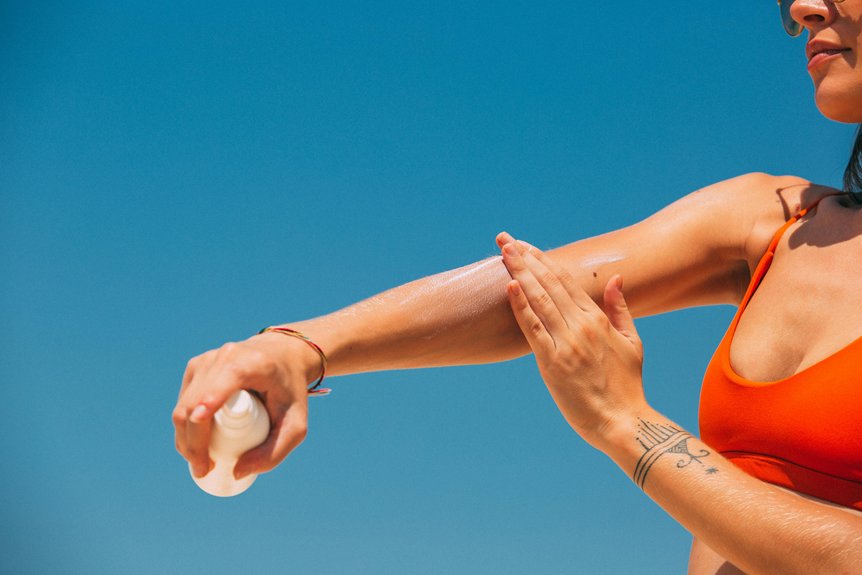
The UV Index estimates sunburn risk using average conditions like sun angle and ozone levels, so it doesn’t capture real-time changes or all environmental factors. Clouds, altitude, and water reflections can increase your actual UV exposure, making burns possible even when the index seems low. It also doesn’t consider your skin’s sensitivity. You should treat the UV Index as a general guide and apply multiple protection measures. Understanding these nuances helps explain why you might still burn despite the forecast.
How the UV Index Is Calculated and Its Limitations
Although the UV Index provides a standardized measure of ultraviolet radiation levels, its calculation involves several assumptions and simplifications that can affect accuracy.
When you look at the UV index calculation, it relies on models estimating UV radiation based on factors like sun angle and ozone concentration. However, these models use average conditions and can’t capture real-time variations precisely.
As a result, measurement accuracy may vary, making the reported UV index a general guide rather than an exact figure. Understanding these limitations helps you interpret UV index values more realistically when planning sun exposure.
Environmental Factors That Affect UV Exposure
While the UV Index offers a helpful estimate of ultraviolet radiation, actual UV exposure depends on several environmental factors that the index doesn’t fully account for.
Cloud cover can reduce UV radiation but sometimes lets enough through to cause burns. Altitude effects matter too; the higher you are, the stronger the UV rays.
Water reflection increases UV exposure by bouncing rays onto your skin. Geographical location and time of year influence the sun’s angle and intensity.
Finally, surface orientation affects how much UV radiation you receive, as sun-facing surfaces absorb more rays than shaded or angled ones.
Tips for Protecting Your Skin Beyond the UV Index
Since the UV Index doesn’t capture every factor influencing ultraviolet exposure, you need to take additional precautions to protect your skin effectively.
Start with consistent sunscreen application, choosing broad-spectrum products with adequate SPF, and reapply every two hours or after swimming.
Wearing protective clothing, like long sleeves and wide-brimmed hats, adds a physical barrier against harmful rays.
Seek shade during peak sunlight hours, typically from 10 a.m. to 4 p.m., when UV radiation is strongest.
Combining these strategies helps you maintain skin health and freedom to enjoy outdoor activities without relying solely on the UV Index.
Frequently Asked Questions
Can UV Index Vary by Time of Day?
Yes, the UV index can vary considerably by time of day due to UV fluctuations caused by the sun’s position.
You’ll notice daily variations with the highest UV levels typically occurring around midday, when the sun is most directly overhead.
Early morning and late afternoon UV readings are usually lower.
Understanding these daily variations helps you plan outdoor activities safely, reducing your risk of overexposure and sunburn during peak UV times.
Does Clothing Affect UV Protection Differently?
Yes, clothing affects UV protection differently based on fabric types and protective layers.
Dense fabrics like denim or tightly woven cotton block more UV rays than loose or thin materials. Darker colors usually offer better protection.
Multiple protective layers increase defense against UV radiation, so layering can help.
However, some fabrics are specially treated to enhance UV resistance, providing reliable protection even with lighter or thinner materials.
Choose wisely to stay safe.
How Does UV Exposure Impact Eye Health?
UV exposure can cause significant sun damage to your eyes, increasing the risk of cataracts, macular degeneration, and photokeratitis.
To protect your eye health, wearing proper eye protection like UV-blocking sunglasses is essential. These glasses reduce harmful rays that penetrate your eyes, helping prevent long-term damage.
Since your eyes are sensitive to UV radiation, consistent protection is necessary, especially during prolonged outdoor activities under strong sunlight.
Are Tanning Beds Included in UV Index Readings?
No, tanning beds aren’t included in UV index readings because those indexes measure natural sunlight’s UV radiation.
However, tanning bed regulations exist due to indoor tanning risks, which can be significant.
You should know that indoor tanning exposes you to concentrated UV rays, increasing skin damage and health risks.
Understanding these distinctions helps you make informed decisions about your sun exposure and tanning practices, balancing freedom with safety.
Can Altitude Change UV Intensity Significantly?
Yes, altitude effects can considerably increase UV radiation intensity.
As you ascend, the atmosphere thins, absorbing less UV radiation, which means more reaches your skin. Typically, UV levels rise about 10-12% for every 1,000 meters (3,280 feet) gained in altitude.