

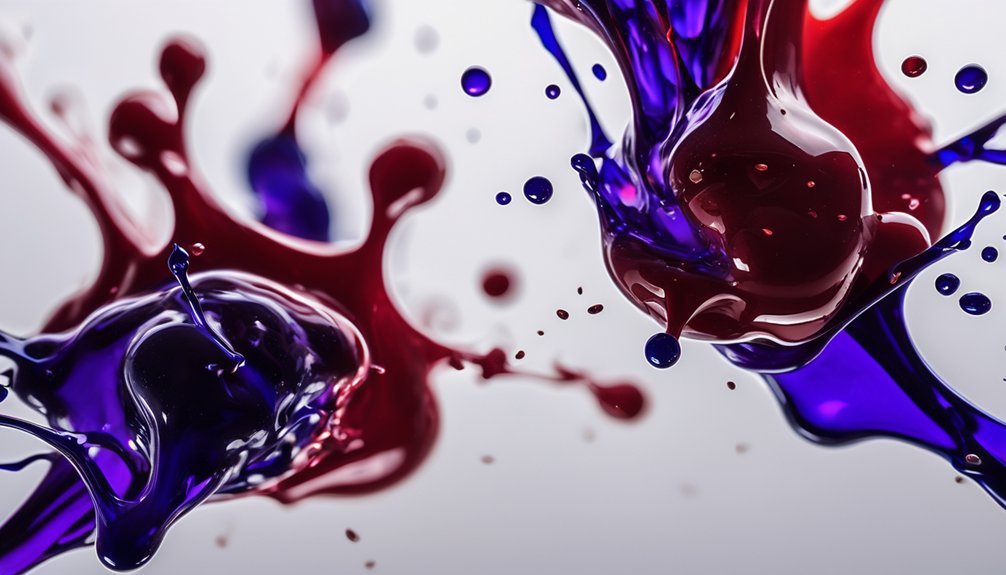
When you mix blue and red, the color you get depends on the context. In paint, which uses subtractive mixing, combining blue and red pigments produces purple or violet, with the exact shade influenced by the types of pigments and their proportions. In digital settings, using additive mixing of blue and red light creates magenta, a bright purplish-pink hue. Understanding these differences helps you control color outcomes effectively. Exploring this topic further reveals more about how color mixing works across mediums.
Understanding Color Mixing: Additive Vs Subtractive
When you mix colors, the result depends on whether you’re dealing with additive or subtractive color mixing.
Additive mixing involves light, where combining red, green, and blue light creates white.
Subtractive mixing, used in painting and printing, relies on pigment properties that absorb certain wavelengths and reflect others.
This difference is essential in color theory because pigments subtract light, so mixing colors like blue and red paint produces different outcomes than light.
Understanding these two methods helps you control your color results more effectively, especially when working with paints or digital displays.
What Happens When You Mix Blue and Red Paints
Mixing blue and red paints produces a color commonly known as purple or violet, but the exact shade depends on several factors.
When you combine these colors, paint properties like pigment concentration and base medium influence the result. Color theory explains that this mixture falls under subtractive color mixing, where overlapping pigments absorb certain wavelengths and reflect others.
The balance between the blue and red hues, as well as the paint’s opacity and texture, affect the final tone. By understanding these elements, you gain control over creating various purples, tailoring the color to your artistic vision.
Blue and Red in Digital Color Models
Although blue and red combine to create purple in traditional paint mixing, digital color models handle these colors differently due to their reliance on light rather than pigment.
In the RGB color system, blue and red are primary colors of light. When you use digital blending, combining full-intensity blue and red light creates magenta, a bright, vivid color distinct from the purple seen in paint.
This difference occurs because RGB color mixing is additive, meaning colors combine to increase brightness, unlike subtractive paint mixing.
Understanding this helps you navigate color choices accurately in digital design and media applications.
Practical Tips for Achieving the Perfect Purple
Since achieving the perfect purple depends on your medium, you need to adjust your approach accordingly.
Start by consulting the color wheel to understand how blue and red interact. Mixing techniques vary: in paint, gradually blend equal parts of blue and red, then tweak by adding more blue for cooler tones or red for warmer ones.
In digital design, adjust RGB or HEX values carefully to reach the desired hue. Always test your mix on a small scale before committing.
Frequently Asked Questions
Can Blue and Red Light Create Colors Other Than Purple?
You can’t mix blue and red light to create colors other than shades of purple because color mixing follows the light spectrum rules. Your freedom lies in exploring combinations beyond just these two colors for variety.
Why Do Some People See Different Shades When Mixing Blue and Red?
You see different shades mixing blue and red because your color perception varies due to visual differences like lighting, screen settings, and individual eyesight. Embrace these unique experiences—they reflect your personal freedom to see the world differently.
How Does Color Blindness Affect Perception of Blue and Red Mixtures?
Color blindness affects your color perception by limiting how you see blue and red mixtures, causing visual differences that make some hues blend or appear muted. You’ll experience colors differently, but you’re free to explore and express your unique view.
Are There Cultural Meanings Associated With Mixing Blue and Red?
Yes, you’ll find cultural symbolism in mixing blue and red, often representing balance or power. Color psychology shows these hues evoke trust and passion, so blending them taps into your desire for freedom and bold expression.
Can Blue and Red Dyes React Chemically When Mixed?
You won’t see chemical reactions when mixing blue and red dyes because their dye properties usually just blend pigments physically. This freedom lets you create new colors without worrying about altering their chemical structure.