

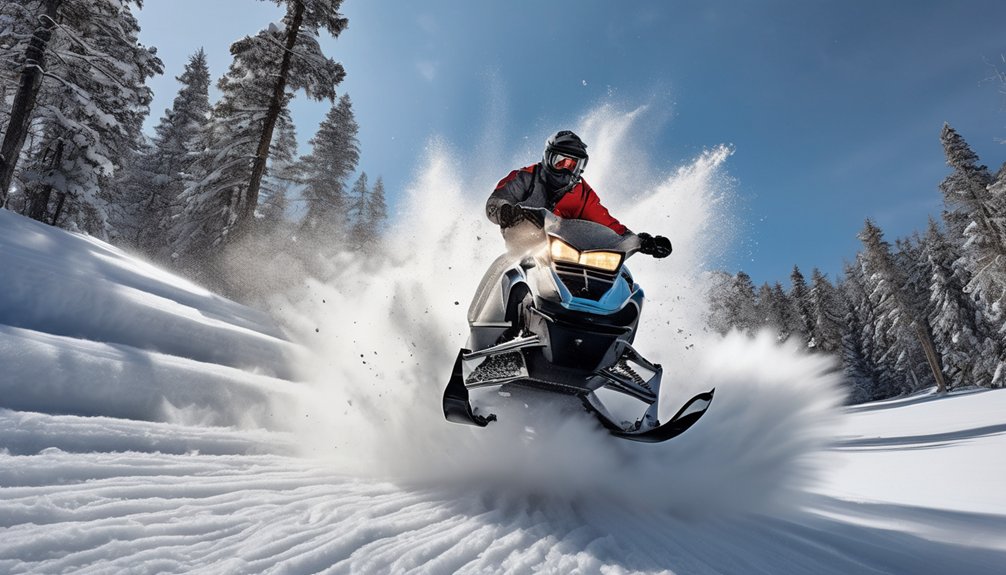
When you crash a snowmobile, momentum and inertia keep it moving until external forces act to stop or change its motion. Friction between the track and snow affects your grip, which varies with snow conditions and impacts your control. During a collision, impact forces rapidly transfer energy, influenced by your speed and the snowmobile’s mass. These physics principles explain why crashes happen and how you can manage them. Exploring these factors reveals ways to ride more safely.
The Role of Momentum and Inertia in Snowmobile Crashes
Although you mightn’t always notice it, momentum and inertia play essential roles in snowmobile crashes.
When you ride, your snowmobile’s momentum, a product of its mass and velocity, carries it forward. Momentum conservation means that unless an external force acts, your snowmobile keeps moving in the same direction.
Inertia effects explain why your snowmobile resists changes in motion; it wants to continue moving or stay still. During a crash, these forces interact, making sudden stops or turns challenging.
Understanding these concepts helps you grasp why controlling speed and anticipating movement is vital for safe freedom on the snow.
How Friction and Traction Affect Snowmobile Control
Since snowmobile control depends heavily on how well your machine interacts with the snow, understanding friction and traction is essential.
Friction between the snowmobile’s track and the snow surface provides the grip needed for movement and turning. Traction control systems help optimize this grip by adjusting power delivery based on varying snow conditions, improving stability and responsiveness.
When snow is soft or icy, friction decreases, reducing control and increasing slip risk. By recognizing how friction and traction vary with snow conditions, you can better anticipate your snowmobile’s behavior and maintain safer, more confident control on diverse terrain.
Impact Forces and Energy Transfer During a Collision
When a snowmobile collides with an object, the impact forces generated can be substantial, transferring energy rapidly between the machine and the obstacle.
You need to understand that impact energy depends on your snowmobile’s speed and mass, influencing how much force the collision exerts.
Collision dynamics explain how this energy spreads through both the snowmobile and the object it hits. This transfer can cause damage or sudden stops, affecting your control and safety.
Frequently Asked Questions
What Safety Gear Is Essential for Snowmobile Riders?
You should always wear a helmet meeting safety standards and protective clothing to guard against cold and impacts. These essentials let you embrace freedom while staying safe on your snowmobile adventures.
How Does Weather Affect Snowmobile Crash Risks?
You’ll face higher crash risks when temperature effects make snow icy or slushy, and visibility issues like fog or heavy snow limit your sight. Stay alert and adapt to keep your freedom safe on the trails.
What Are Common Injuries From Snowmobile Crashes?
You’ll often face fracture types like wrist, arm, or leg breaks and concussion symptoms such as dizziness or headaches after a crash. Knowing this helps you ride smarter, keeping your freedom and safety intact.
How Can Riders Improve Their Reaction Time During Emergencies?
You can improve your reaction time by practicing reaction drills regularly and building mental preparedness. These habits sharpen your instincts, letting you respond swiftly during emergencies, so you stay free to ride confidently and safely without hesitation.
What Maintenance Tips Prevent Mechanical Failures Leading to Crashes?
You should perform preventive maintenance and regular inspections to keep your snowmobile in top shape. Checking brakes, throttle, and suspension guarantees freedom on the trail without unexpected mechanical failures that could cause crashes.