

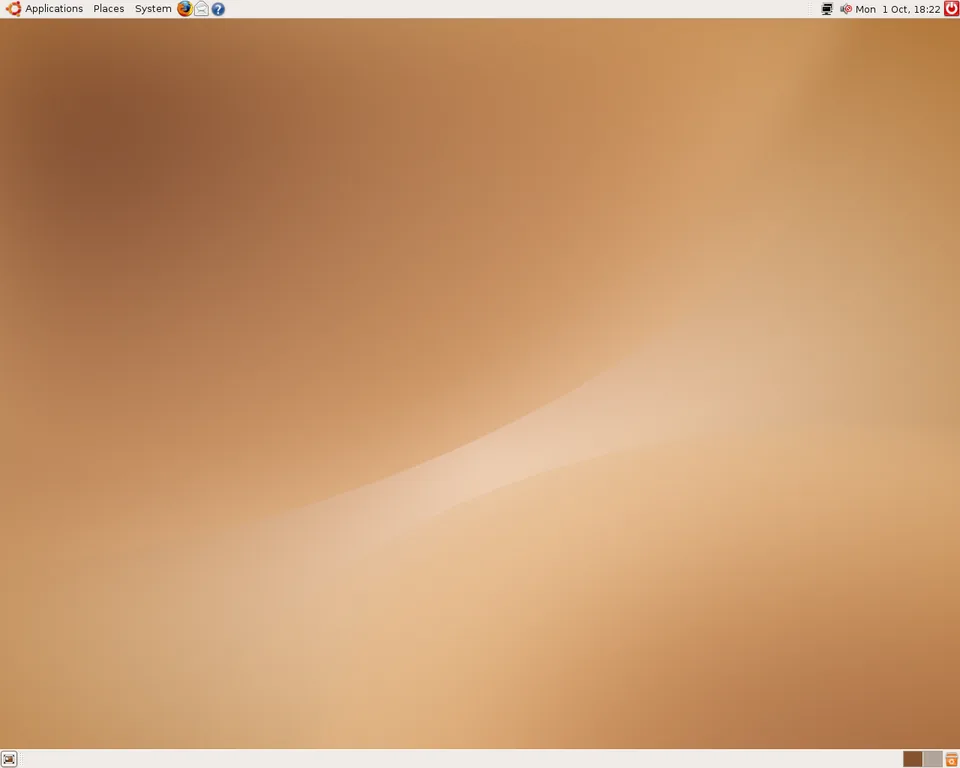
Dell began selling Ubuntu 7.04 on May 24, 2007: the XPS 410n and Dimension E520n desktops and the Inspiron E1505n notebook, in the United States. Customers had asked for it on Dell’s IdeaStorm site, and a Linux survey run on Dell’s blog helped set the shopping list.
We found no evidence that Dell ever sold PCs with Fedora preinstalled, so any claim that it did is unproven. Dell’s consumer Linux was Ubuntu, its Precision workstations offered Red Hat Enterprise Linux, and Ubuntu says over 160 Dell models ship with Ubuntu preinstalled today.
DellOne2One is an independent publication. It has no affiliation, partnership, sponsorship or relationship of any kind with Dell Inc. or Dell Technologies, and is not endorsed by them.
DellOne2One is an independent technology publication. It is not affiliated with, endorsed by or sponsored by Dell Inc. or Dell Technologies, and Dell, XPS, Inspiron and Precision are trademarks of their owners. The domain hosted Dell’s official blog from July 2006, and this page draws on Wayback Machine copies of that blog.
When did Dell start shipping Ubuntu on its PCs?
The consumer launch was May 24, 2007, but the story starts earlier. Dell had offered Linux notebooks in 2000 and, by early 2001, had disbanded its Linux business unit.
| Date | What happened | Source |
|---|---|---|
| Feb 16, 2007 | IdeaStorm opens. A user’s Linux idea becomes number one, backed by about 30,000 members. | Direct2Dell, May 24, 2007 |
| Mar 13, 2007 | Linux technology strategist Matt Domsch opens a Linux survey, open until March 23. Dell’s May 24 post says over 100,000 people completed it. | Direct2Dell, Mar 13, 2007 |
| May 1, 2007 | Dell and Canonical announce Ubuntu on select consumer desktops and notebooks. | Direct2Dell, May 1, 2007 |
| May 24, 2007 | US sales start. E520n and E1505n from $599; XPS 410n $849, corrected from $899. | Direct2Dell, May 24, 2007 |
| Aug 7, 2007 | One notebook and one desktop with Ubuntu announced for the UK, France and Germany. | Wikipedia, Dell |
| Nov 2007 | Red Hat Enterprise Linux 5.1 factory-installed on Precision M4300 and M6300. | Direct2Dell Linux posts |
| Nov 30, 2007 | Dell reports shipping 40,000 Ubuntu PCs. | Wikipedia, Dell |
| Feb 21, 2008 | Ubuntu 7.10 systems reach Canada and Latin America; Inspiron 1525n reaches the US. | Direct2Dell, Feb 21, 2008 |
| Jul 18, 2008 | Ubuntu 8.04 on XPS M1330N, Inspiron 1525N and Inspiron 530N, with language choice at first boot. | Direct2Dell Linux posts |
| 2009 | Canonical and Dell form a global partnership for supported open-source solutions. | Ubuntu, Dell page |
| Today | Ubuntu says over 160 Dell laptop, desktop and workstation models ship with Ubuntu preinstalled. | Ubuntu, Dell page |
What did a 2007 buyer actually get with Ubuntu on a Dell?
The menu was restricted. Dell’s Linux team said peripheral options would be a subset of what Windows buyers could pick, limited to hardware with the most mature Linux drivers.
Dell used open-source drivers where it could and restricted drivers where no open equivalent existed, such as Intel wireless cards and Conexant modems.
Codecs were the sore point. At launch Dell did not add support for MPEG, WMA, WMV, DVD or QuickTime beyond what Ubuntu 7.04 already distributed. By February 2008 Dell said its new Ubuntu systems included built-in DVD playback.
Support was split. Dell handled hardware, the Dell Community Forum handled community questions, and Canonical sold paid operating-system support in 30-day, one-year Basic and one-year Standard tiers.
Did Dell ever ship Fedora on its PCs?
We found no evidence that it did. That is an absence of evidence, not proof that it never happened. Wikipedia’s Dell article names Ubuntu and, for China, SUSE, and never mentions Fedora.
Fedora appears as an engineering relationship. Matt Domsch, Dell’s Linux technology strategist, blogged about Fedora’s mirror network, presented MirrorManager at the 2008 Red Hat Summit and joined FUDCon, the Fedora developer conference.
Our records of the old media host list a file named Fedora_cc in an August 2007 folder, but we found no archived copy and do not know what it contained. To choose between the two systems for your own machine, read our Fedora vs Ubuntu workstation comparison and check the Fedora Project for current releases.
What about Dell business PCs and workstations?
Business Linux ran on a separate track. Dell said PowerEdge servers had offered Red Hat Linux since 1999 and Novell SUSE Linux Enterprise Server since 2005.
In late 2007 the Precision T3400, T5400 and T7400 desktops could be bought with Red Hat Enterprise Linux 5 x86_64 from day one. For OptiPlex, Latitude and Vostro machines, Dell said it was certifying them with SUSE Linux Enterprise Desktop 10, according to a March 31, 2008 update from John Hull, Dell’s manager of Linux OS engineering.
How did the One2One blog run the Linux conversation?
The blog ran it in public, with numbers. On May 24, 2007, Lionel Menchaca wrote that Linux posts were the three most viewed since the blog launched in July 2006, and that the survey post and the Ubuntu 7.04 post each drew well over 500 comments.
The launch-day vlog interviewed John Hull, desktop lead Roger Noriega, notebook lead Rezwanul Kabir and Hatim Amro, who got Ubuntu through manufacturing. By the July 2008 capture, the Linux category held 89 posts.
For the wider story see the history of the Dell One2One corporate blog, the Dell One2One customer advocacy model and our One2One video archive.
Where does Dell Developer Edition fit in?
We can document a few anchors but not every step. A video titled “Introducing XPS 13 developer edition” was uploaded in November 2012, and a video uploaded in September 2017 shows Barton George telling the Project Sputnik story at Open Source Summit North America.
Wikipedia says that as of 2021 Dell still offers select laptops and workstations with Ubuntu preinstalled under the Developer Edition name. Ubuntu’s Dell page names the XPS 13 Plus developer edition with Ubuntu 22.04 LTS.
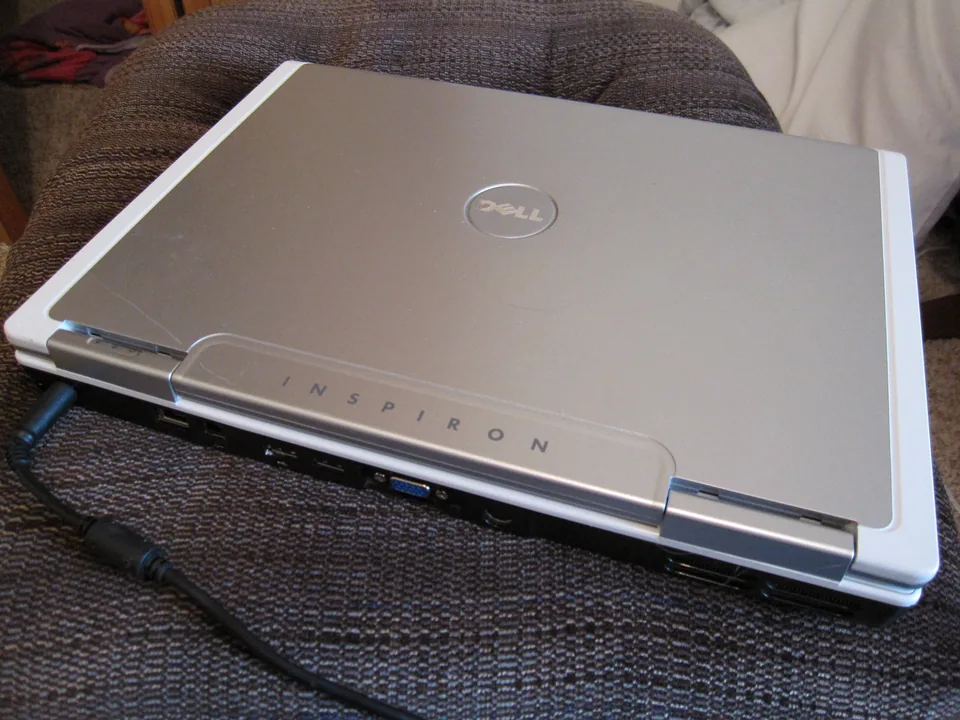

To run Ubuntu on a current Dell, start with our Ubuntu on Dell laptops setup guide and the XPS 13 Plus Developer Edition review. Desktop shoppers can use the Dell XPS desktop buying guide.
What should you take from this as a buyer?
Preinstalled Linux from Dell has meant, since 2007, a tested configuration in exchange for fewer choices. Ubuntu’s Dell page also points to certified Dell desktops.
| What you gain | What you give up |
|---|---|
| Options tested by Dell’s Linux team, open-source drivers wherever they existed, and Dell responsibility for hardware support. | A shorter component list, missing codecs at the 2007 launch, and fee-based OS support through Canonical if you wanted it. |
My position: buy from Ubuntu’s certified list for your exact model, not from forum memory of what Dell sold in 2007. Models, ports and drivers have changed since 2007, so a current list is a better guide than a 2007 spec sheet.
What could we not verify?
We could not confirm any Fedora preinstall by Dell, or what the Fedora_cc file contained, and absence of evidence is not proof. We found no archived copy of Linux.flv, the vlog attached to the May 24, 2007 post. The only Ubuntu-named file with a 2007 capture is Ubuntu.wmv, the Shuttleworth vlog from May 1.
Dell’s own product pages blocked our automated fetch, so we cannot date each Developer Edition generation. The 40,000 figure and the August 7, 2007 European announcement come from Wikipedia’s summary, and we did not locate Dell’s original statements.
Frequently asked questions
When did Dell start selling Ubuntu PCs?
Dell started selling Ubuntu 7.04 PCs in the United States on May 24, 2007, after announcing its Canonical partnership on May 1. The first three systems were the XPS 410n, Dimension E520n and Inspiron E1505n, starting at $849 for the XPS and $599 for the other two.
Did Dell sell Fedora preinstalled?
We found no record of it. The Dell Linux preinstalls we could verify were Ubuntu on consumer PCs and Red Hat Enterprise Linux on Precision workstations, while Dell engineers worked on Fedora’s mirror network as community contributors. That is an absence of evidence, not proof.
What is Dell Developer Edition?
It is Dell’s name for select laptops and workstations sold with Ubuntu preinstalled, according to Wikipedia. Ubuntu’s Dell page lists the XPS 13 Plus developer edition with Ubuntu 22.04 LTS as an example and says over 160 Dell models ship with Ubuntu.
Can you still watch the original One2One Linux vlogs?
Mostly no. The original media host no longer serves the files, and the Internet Archive’s index for that host lists only three files with Linux or Ubuntu in the name, one of them the May 1, 2007 Shuttleworth vlog. The One2One video archive lists which survive.